2 compounds
Lab supplies for reconstituting research peptides
Lyophilised peptides arrive as a dry powder and are dissolved before laboratory use. The liquid used to dissolve them, called the diluent, matters: it affects how long a reconstituted vial can be kept and whether a given peptide dissolves well at all. This category holds the two diluents most often used for that step.

Lab supplies: side by side
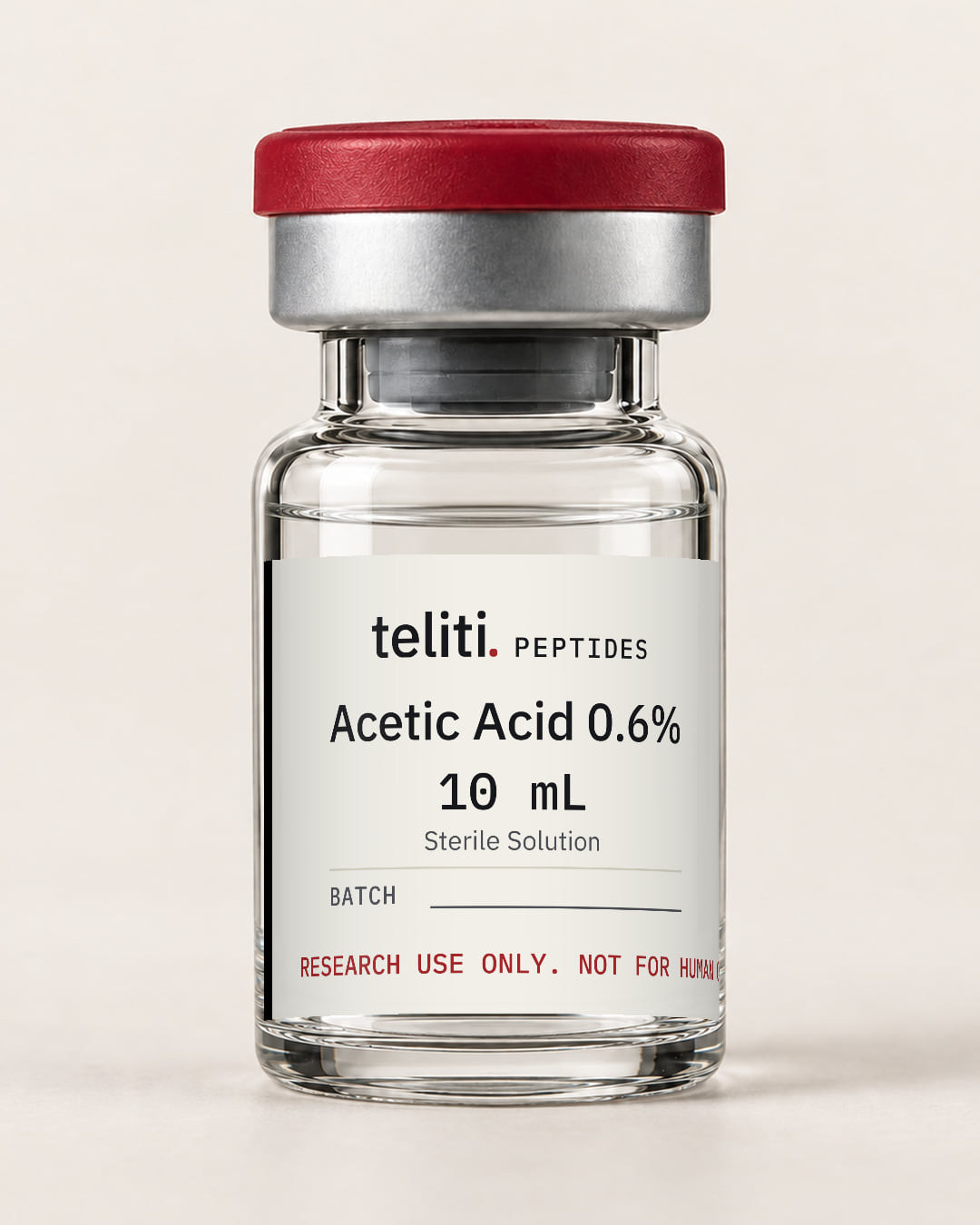
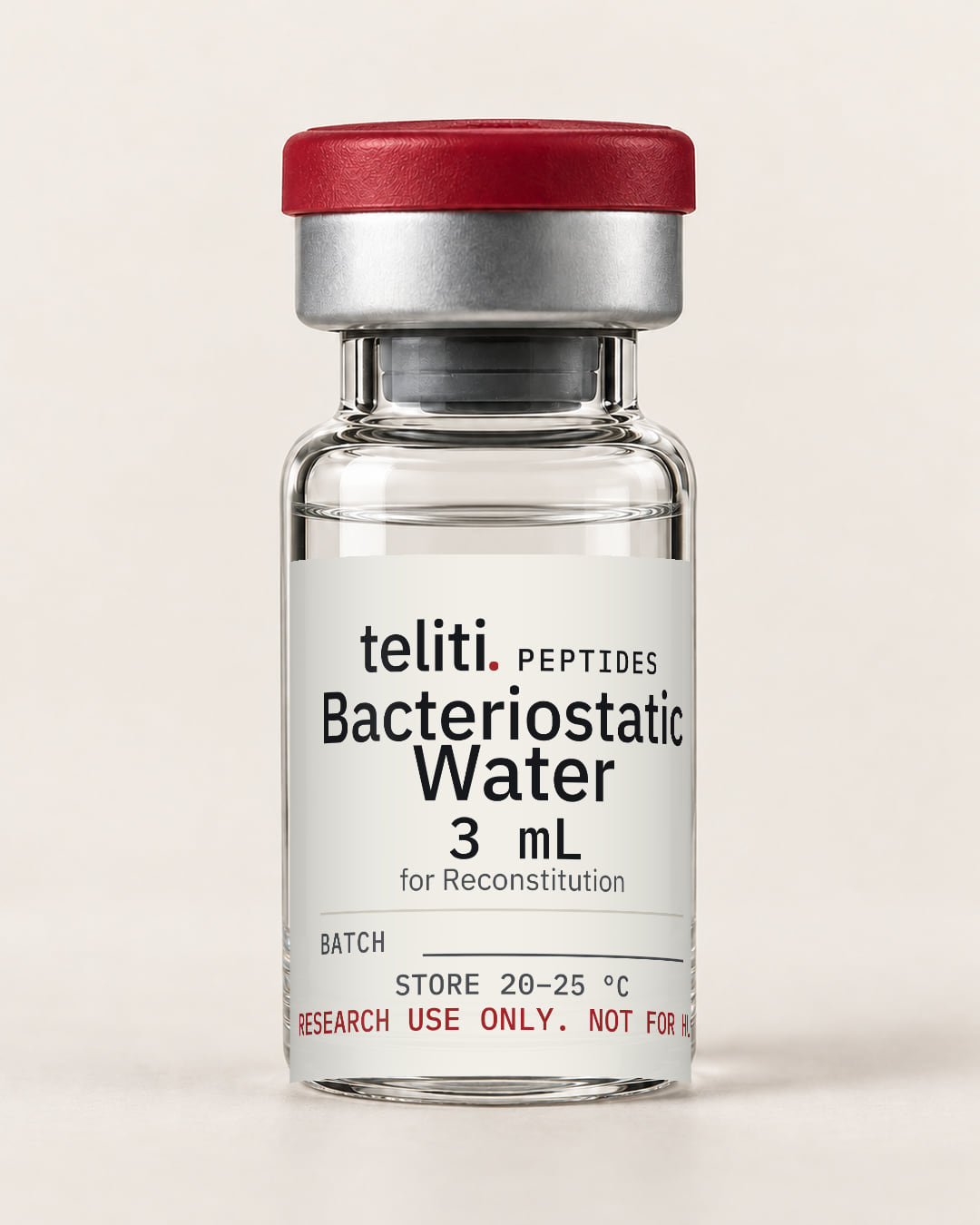
| Acetic Acid 0.6% Sterile Solution | Bacteriostatic Water for Reconstitution | |
|---|---|---|
| Form | Solution | Solution |
| Sizes | 10 mL | 3 mL, 5 mL, 10 mL |
| Price | RM 30 | RM 10–15 |
| Molecular weight | 60.1 g/mol | — |
| CAS number | 64-19-7 | — |
| Certificate published | Not yet | Not yet |
About lab supplies
Bacteriostatic water is sterile water containing 0.9% benzyl alcohol, a preservative that allows several withdrawals from one vial. Its page gives the composition and storage figures from a published product label, with the label linked. Acetic acid 0.6% is a dilute, sterile acidic solution used for peptides that dissolve poorly in neutral water; its page gives what the solution is and leaves out any storage figure no source supports.
Each supply page lists every vial size with its price and stock. For the arithmetic of reconstitution, which is how much diluent gives which concentration, use the reconstitution calculator, which shows its working. The lab guide on storing lyophilised and reconstituted peptides covers what the published supplier inserts say about keeping vials before and after they are dissolved. These supplies are sold for laboratory use only.
Research and comparisons
-
Lab guide
Peptide reconstitution arithmetic, worked through
Concentration is the amount of peptide divided by the volume of diluent. Everything else in reconstitution arithmetic follows from that one division, as the worked examples below show.
-
Lab guide
Storing lyophilised and reconstituted peptides
Sealed, freeze-dried peptides are usually kept frozen, at −20 °C, away from light. Once dissolved, the published supplier inserts cited here mostly advise against storing the solution for more than a day.