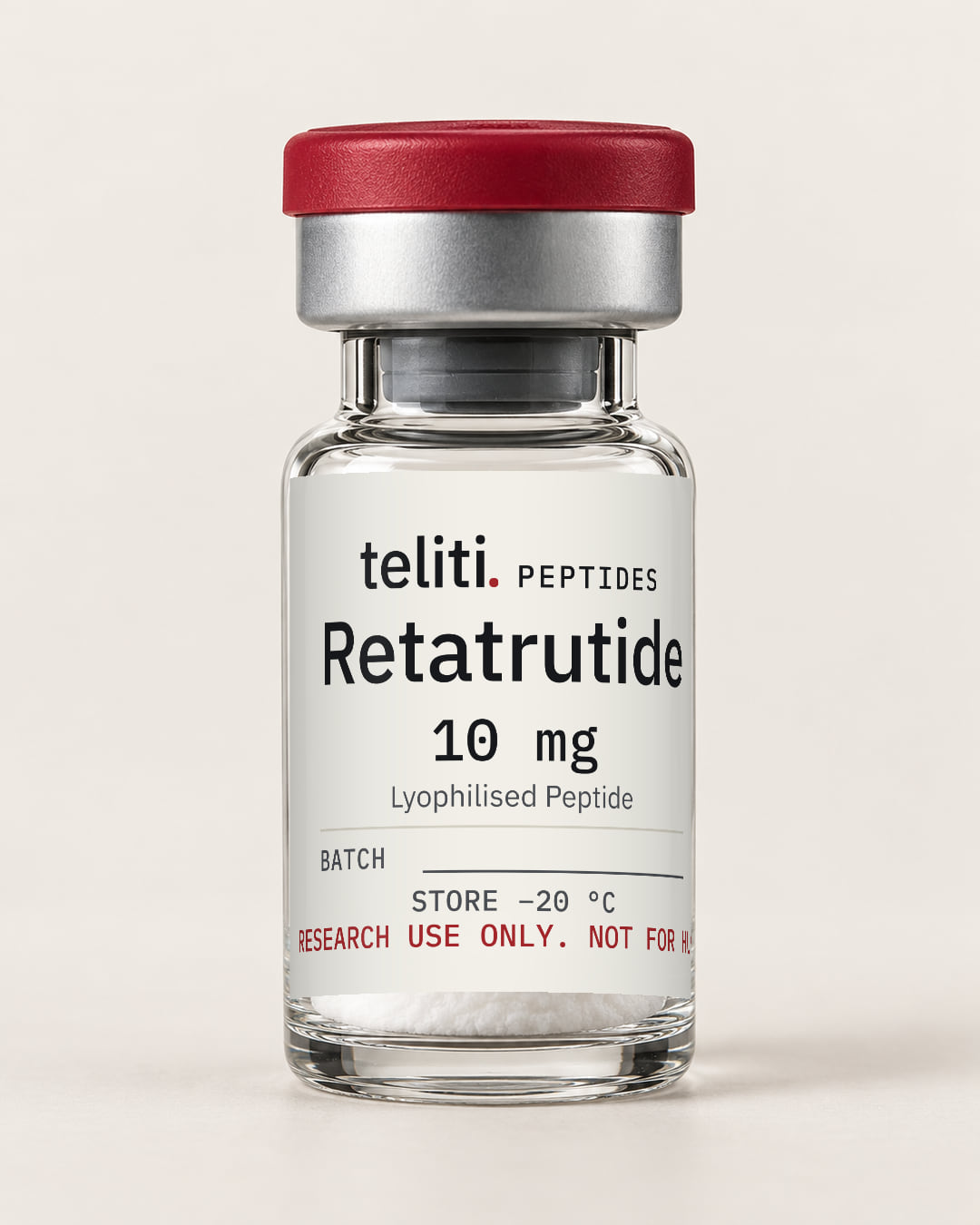
2 compounds
Incretin receptor agonist peptides for research
Incretin receptor agonists are synthetic peptides built to act at the receptors for the gut hormones GLP-1 (glucagon-like peptide-1) and GIP (glucose-dependent insulinotropic polypeptide), and in newer designs at the glucagon receptor as well. They are among the most actively studied peptide classes in metabolic research, with large randomised trials published in the New England Journal of Medicine, The Lancet and Nature Medicine.

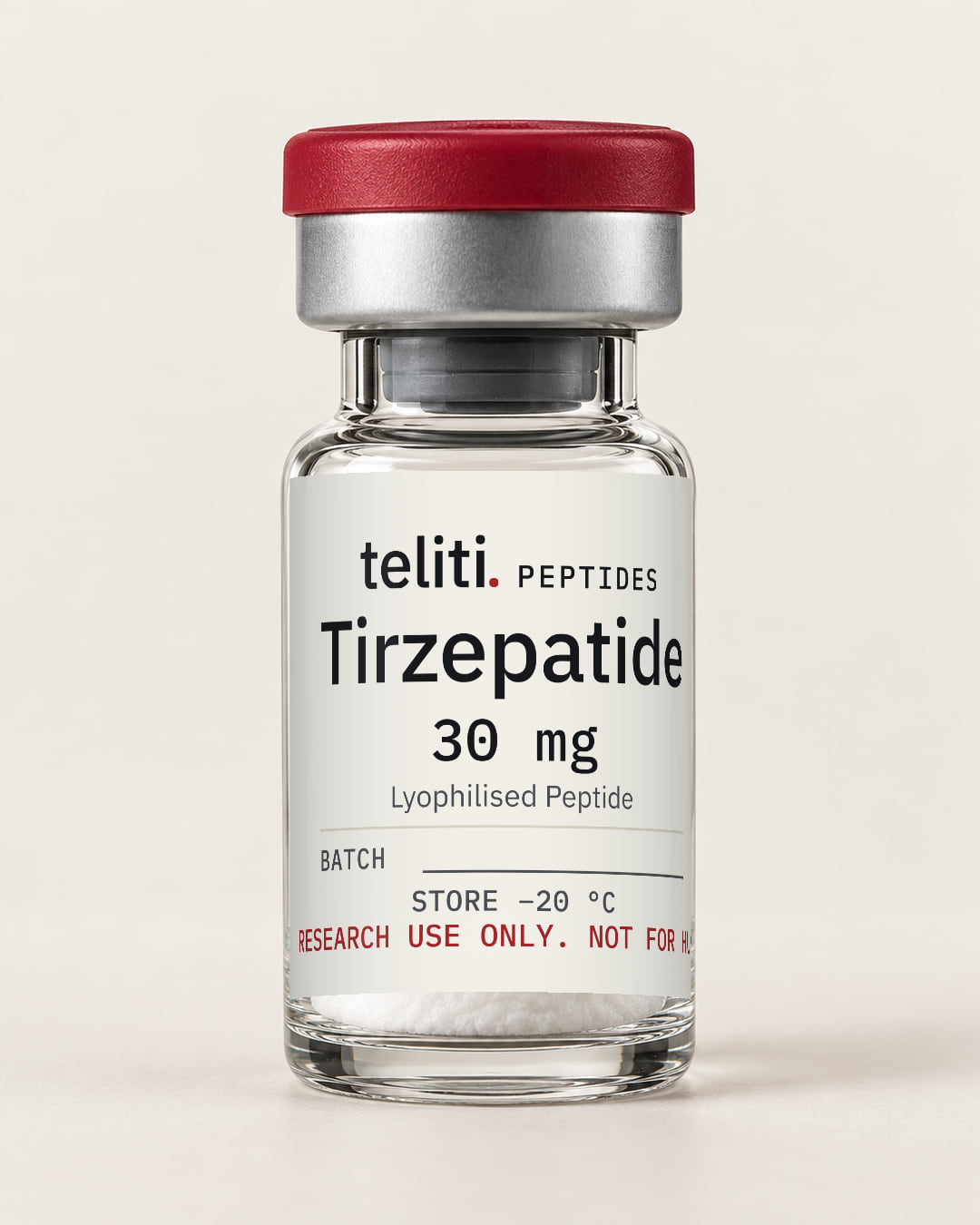
Incretin receptor agonists: side by side
| Retatrutide Lyophilised Peptide | Tirzepatide Lyophilised Peptide | |
|---|---|---|
| Form | Lyophilised powder | Lyophilised powder |
| Sizes | 10 mg, 20 mg, 30 mg | 30 mg |
| Price | RM 135–310 | RM 140 |
| Molecular weight | 4,731.4 g/mol | 4,813.5 g/mol |
| CAS number | 2381089-83-2 | 2023788-19-2 |
| Certificate published | Not yet | Not yet |
About incretin receptor agonists
This category holds two lipidated peptides that differ in how many receptors they target. Tirzepatide is a dual GIP and GLP-1 receptor agonist. Retatrutide adds glucagon receptor activity, which makes it a triple agonist, and it has completed phase 2 and phase 3 trials. Both carry a fatty-acid side chain that binds albumin and extends their half-life in circulation, which is why published studies give them once a week.
Each compound page lists every vial size with its price and stock, the identity data (CAS number, molecular formula and weight, sequence), supplier storage figures, and the trials behind it, each linked to its PubMed record or DOI. For how the two differ in structure and in the evidence published so far, read the retatrutide and tirzepatide comparison. Both are sold for laboratory research only.
Research and comparisons
-
Research summary
Retatrutide: what the published trials report
Retatrutide is a single peptide that acts at three receptors: GIP, GLP-1 and glucagon. It has been tested in phase 1, phase 2 and phase 3 trials, and the results below are what those papers report.
-
Comparison
Retatrutide vs tirzepatide: how they differ
Tirzepatide acts at two receptors, GIP and GLP-1; retatrutide adds a third, glucagon. Tirzepatide is an approved medicine in the United States, while retatrutide was still investigational when this was written.