TB-500 Lyophilised Peptide
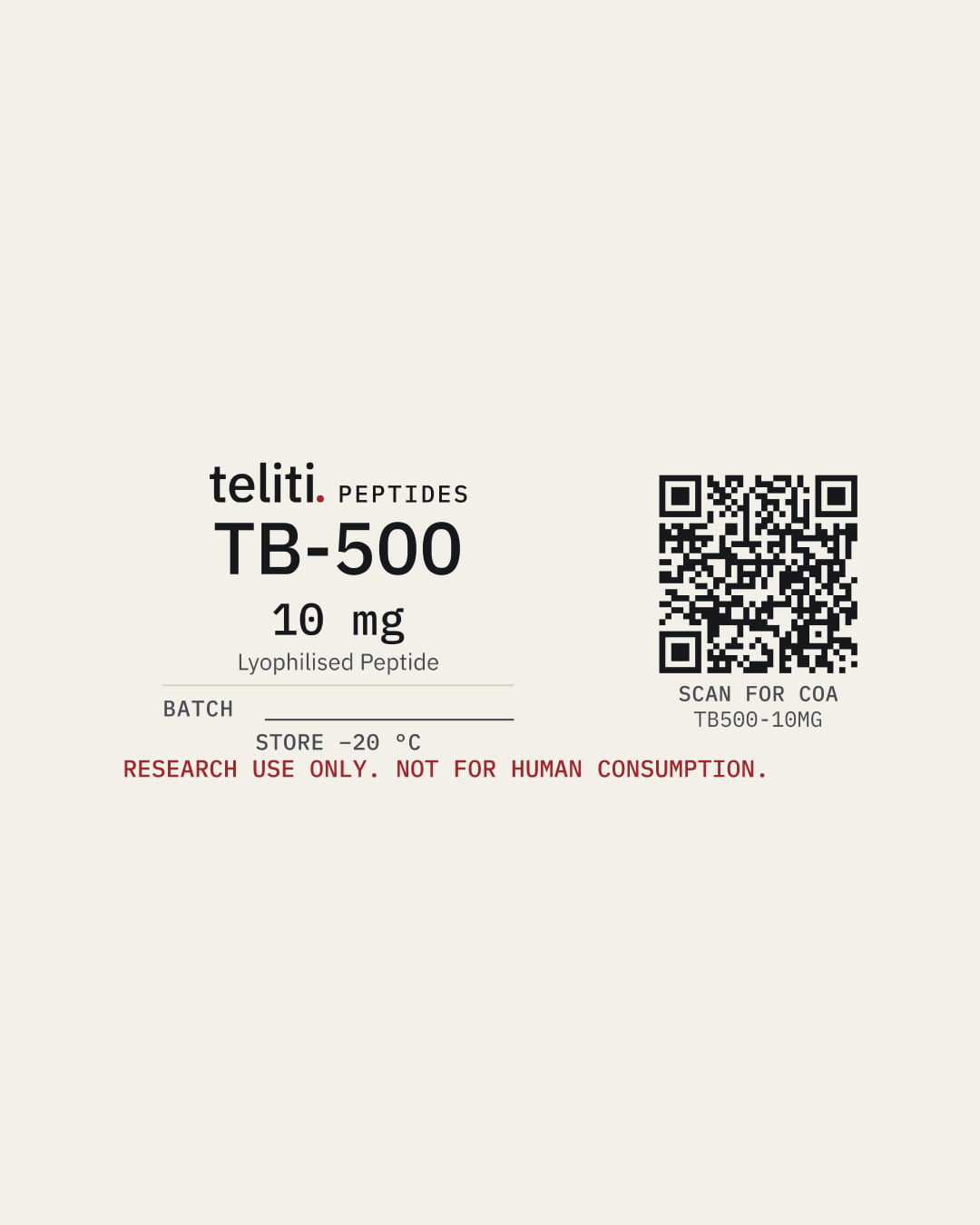
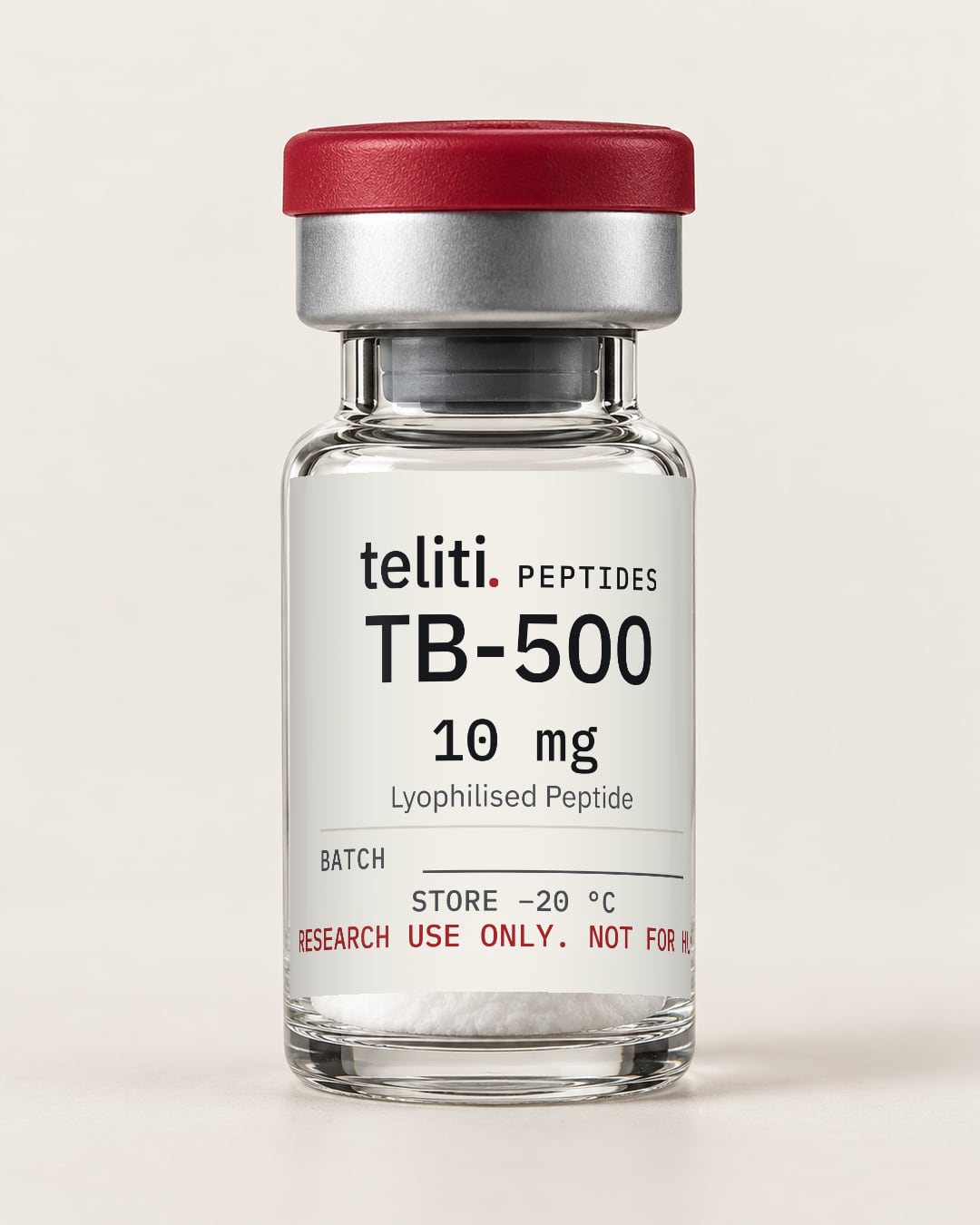
Thymosin beta-4 is a 43-amino-acid, N-terminally acetylated peptide that is the main G-actin-sequestering molecule in eukaryotic cells. The name TB-500 is used by suppliers for a research product and is not a defined chemical name, so the identity fields here describe full-length thymosin beta-4. TB-500 is supplied as a lyophilised (freeze-dried) powder in a sealed vial, in 10 mg, priced RM 180. No certificate of analysis has been published for the batch on sale yet, so no purity figure is claimed on this page. Ships within 2 working days of payment. Sold for laboratory research use only, not for human or veterinary use.
Research use only. Sold for laboratory research only. Not for human or veterinary use, not for consumption, and not a medicine, food or cosmetic.
- Ships within 2 working days of payment.
- Free shipping across Malaysia.
- Pay by FPX online banking.
Certificates of analysis
No certificate of analysis has been published for the batch on sale yet, so this page makes no purity claim. Each certificate will name the testing laboratory, the batch, the test date and the method.
TB-500 specifications
| Also known as | Thymosin beta-4, Tβ4, Timbetasin, Ac-LKKTETQ (reported TB-500 fragment) |
|---|---|
| Form | Lyophilised (freeze-dried) powder in a sealed vial |
| Sizes | 10 mg |
| CAS number | 77591-33-4 |
| Molecular formula | C212H350N56O78S |
| Molecular weight | 4,963 g/mol |
| Sequence | Ac-SDKPDMAEIEKFDKSKLKKTETQEKNPLPSKETIEQEKQAGES |
| PubChem | CID 16132341 |
| Storage (sealed) | -20 °C (supplier listing and insert: stable for at least 4 years as a crystalline solid; this is for full-length thymosin beta-4 acetate) |
| Storage (reconstituted) | Supplier insert does not recommend storing the aqueous solution for more than one day |
What research says about TB-500
Thymosin beta-4 is a 43-amino-acid, N-terminally acetylated peptide that is the main G-actin-sequestering molecule in eukaryotic cells. The name TB-500 is used by suppliers for a research product and is not a defined chemical name, so the identity fields here describe full-length thymosin beta-4.
Thymosin beta-4 sequesters G-actin, and in cell and mouse studies it has been reported to form a complex with PINCH and integrin-linked kinase and activate Akt; the actin-binding region (residues 17-23, LKKTETQ) has been linked to migration, angiogenesis and wound-healing activity in vitro.
Thymosin beta-4 itself has been evaluated in phase 2 trials for dermal wounds; TB-500 as a supplied research product is not an approved medicine, and a doping-control laboratory reported it to contain an acetylated 17-23 fragment.
Cited studies
-
Thymosin beta4 promoted cardiomyocyte migration and survival in culture, formed a complex with PINCH and ILK activating Akt, and improved cardiac function after coronary ligation in mice.
Thymosin beta4 activates integrin-linked kinase and promotes cardiac cell migration, survival and cardiac repair.. Nature, 2004. doi:10.1038/nature03000 · PubMed 15565145
-
The review described Ac-SDKP, an N-terminal 15-residue region and a LKKTETQ-containing region as separate active sites linked to anti-inflammatory, survival and angiogenesis/migration activities respectively.
Biological activities of thymosin beta4 defined by active sites in short peptide sequences.. FASEB J, 2010. doi:10.1096/fj.09-142307 · PubMed 20179146
-
Mass spectrometry identified the N-terminal acetylated 17-23 fragment of human thymosin beta-4 (Ac-LKKTETQ) in a TB-500 product, which was then synthesised and an analytical detection method proposed.
Synthesis and characterization of the N-terminal acetylated 17-23 fragment of thymosin beta 4 identified in TB-500, a product suspected to possess doping potential.. Drug Test Anal, 2012. doi:10.1002/dta.1402 · PubMed 22962027
-
The review reported that thymosin beta-4 increased the rate of dermal healing in several preclinical models and in phase 2 trials in patients with pressure ulcers, stasis ulcers and epidermolysis bullosa wounds.
Thymosin β4 Promotes Dermal Healing.. Vitam Horm, 2016. doi:10.1016/bs.vh.2016.04.005 · PubMed 27450738
Handling and storage
- Sealed vial
- -20 °C (supplier listing and insert: stable for at least 4 years as a crystalline solid; this is for full-length thymosin beta-4 acetate)
- After reconstitution
- Supplier insert does not recommend storing the aqueous solution for more than one day
Shipping, returns and payment
Dispatch. Ships within 2 working days of payment.
Shipping. Free shipping across Malaysia. Peninsular Malaysia 1–4 working days; Sabah, Sarawak and Labuan 3–7 working days.
Returns. No change-of-mind returns; a wrong or damaged item is replaced or refunded. Nothing here affects your rights under the Consumer Protection Act 1999.
Payment. FPX online banking.
Questions
- Is there a certificate of analysis for TB-500?
Not yet for the batch on sale. When one is published it appears in the certificates table on this page with the laboratory, batch, test date, method and result. See how to read a certificate of analysis.
- How is TB-500 stored?
Sealed: -20 °C (supplier listing and insert: stable for at least 4 years as a crystalline solid; this is for full-length thymosin beta-4 acetate). After reconstitution: Supplier insert does not recommend storing the aqueous solution for more than one day. These are supplier figures, cited in the handling section.
More about TB-500
-
Comparison
BPC-157 vs TB-500: how they differ
BPC-157 is a defined 15-residue synthetic peptide. TB-500 is a supplier name: the biology is published for full-length thymosin beta-4, while one analysed TB-500 product was a seven-residue fragment.