Comparison
BPC-157 vs TB-500: how they differ
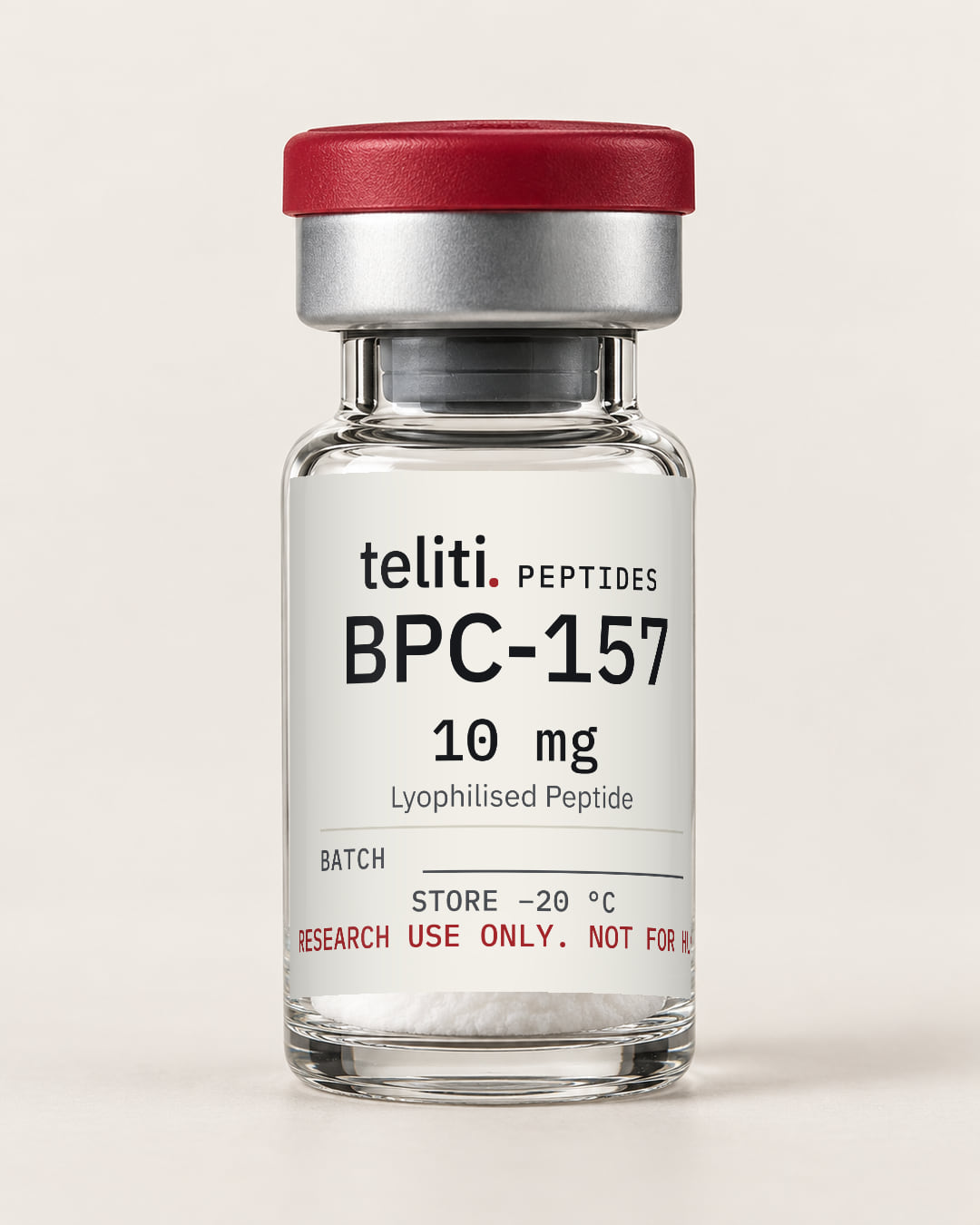
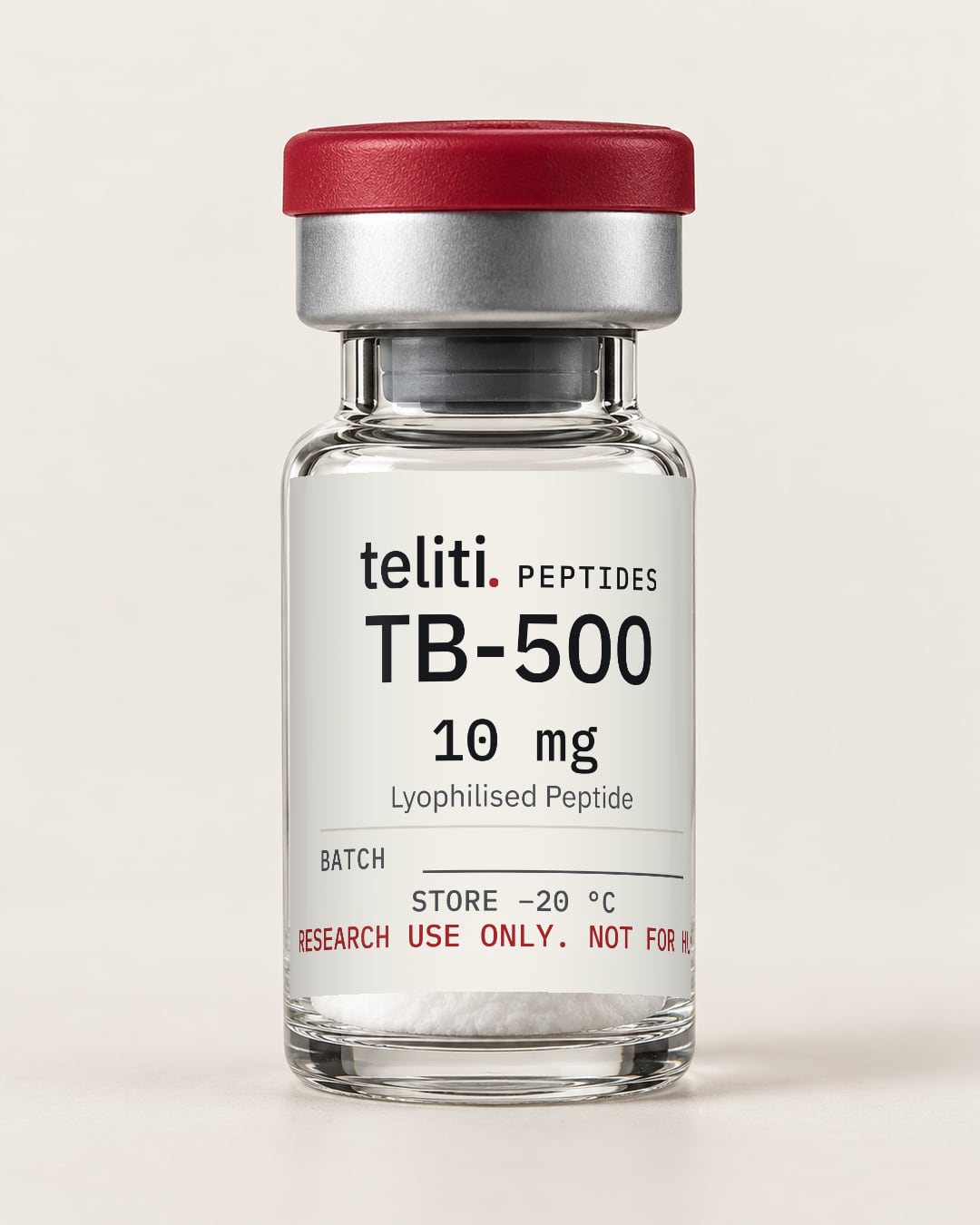
BPC-157 is a defined 15-residue synthetic peptide. TB-500 is a supplier name: the biology is published for full-length thymosin beta-4, while one analysed TB-500 product was a seven-residue fragment.
How do BPC-157 and TB-500 differ?
BPC-157 and TB-500 are often mentioned together as tissue repair peptides, but they are different kinds of thing. BPC-157 has one defined sequence. TB-500 does not: it is a name suppliers use, and the published biology is for thymosin beta-4, a 43-residue protein, while the only published analysis of a TB-500 product found a short fragment of it.
How are they built?
| BPC-157 | TB-500 | |
|---|---|---|
| Length | 15 amino acids | Varies by product |
| Defined by | One sequence (PubChem CID 9941957) | No single structure |
| Related natural molecule | A gastric juice protein sequence | Thymosin beta-4 (43 amino acids) |
A doping-control laboratory reported in Drug Testing and Analysis in 2012 that a product sold as TB-500 contained the acetylated 17–23 fragment of thymosin beta-4, a seven-residue peptide. That is why the TB-500 page says that only a certificate of analysis can confirm which form a batch is.
What has each been studied for?
BPC-157 has been studied in rodent tendon explants, cultured tendon fibroblasts and angiogenesis assays; a 2025 review found only three small human pilot studies. Thymosin beta-4 has been studied more widely: a 2004 paper in Nature reported effects on cardiac cells in culture and in mice, and a 2016 review described phase 2 trials of thymosin beta-4 in dermal wounds. A 2010 review in the FASEB Journal mapped which short regions of thymosin beta-4 are linked to which activity, which matters because a fragment carries only some of them.
How can a lab tell which one is in the vial?
For BPC-157, the identity question is purity and the salt form. For TB-500, it is first which molecule is in the vial, which mass spectrometry on a certificate can show. See how to read a certificate of analysis.
Side by side
| BPC-157 Lyophilised Peptide | TB-500 Lyophilised Peptide | |
|---|---|---|
| Form | Lyophilised powder | Lyophilised powder |
| Sizes | 10 mg, 40 mg | 10 mg |
| Price | RM 150–375 | RM 180 |
| Molecular weight | 1,419.5 g/mol | 4,963 g/mol |
| CAS number | 137525-51-0 | 77591-33-4 |
| Certificate published | Not yet | Not yet |
Cited studies
-
BPC 157 accelerated outgrowth of rat tendon explants and increased migration and survival under H2O2 stress of cultured tendon fibroblasts, without a direct effect on proliferation.
The promoting effect of pentadecapeptide BPC 157 on tendon healing involves tendon outgrowth, cell survival, and cell migration.. J Appl Physiol (1985), 2011. doi:10.1152/japplphysiol.00945.2010 · PubMed 21030672
-
BPC 157 increased vessel density in chick chorioallantoic membrane and tube-formation assays, and increased VEGFR2 expression and VEGFR2-Akt-eNOS signalling in human endothelial cells.
Therapeutic potential of pro-angiogenic BPC157 is associated with VEGFR2 activation and up-regulation.. J Mol Med (Berl), 2017. doi:10.1007/s00109-016-1488-y · PubMed 27847966
-
The review summarised broad preclinical data, identified only three human pilot studies, and concluded that BPC-157 should be considered investigational pending well-designed clinical trials.
Regeneration or Risk? A Narrative Review of BPC-157 for Musculoskeletal Healing.. Curr Rev Musculoskelet Med, 2025. doi:10.1007/s12178-025-09990-7 · PubMed 40789979
-
Mass spectrometry identified the N-terminal acetylated 17-23 fragment of human thymosin beta-4 (Ac-LKKTETQ) in a TB-500 product, which was then synthesised and an analytical detection method proposed.
Synthesis and characterization of the N-terminal acetylated 17-23 fragment of thymosin beta 4 identified in TB-500, a product suspected to possess doping potential.. Drug Test Anal, 2012. doi:10.1002/dta.1402 · PubMed 22962027
-
Thymosin beta4 promoted cardiomyocyte migration and survival in culture, formed a complex with PINCH and ILK activating Akt, and improved cardiac function after coronary ligation in mice.
Thymosin beta4 activates integrin-linked kinase and promotes cardiac cell migration, survival and cardiac repair.. Nature, 2004. doi:10.1038/nature03000 · PubMed 15565145
-
The review described Ac-SDKP, an N-terminal 15-residue region and a LKKTETQ-containing region as separate active sites linked to anti-inflammatory, survival and angiogenesis/migration activities respectively.
Biological activities of thymosin beta4 defined by active sites in short peptide sequences.. FASEB J, 2010. doi:10.1096/fj.09-142307 · PubMed 20179146
-
The review reported that thymosin beta-4 increased the rate of dermal healing in several preclinical models and in phase 2 trials in patients with pressure ulcers, stasis ulcers and epidermolysis bullosa wounds.
Thymosin β4 Promotes Dermal Healing.. Vitam Horm, 2016. doi:10.1016/bs.vh.2016.04.005 · PubMed 27450738