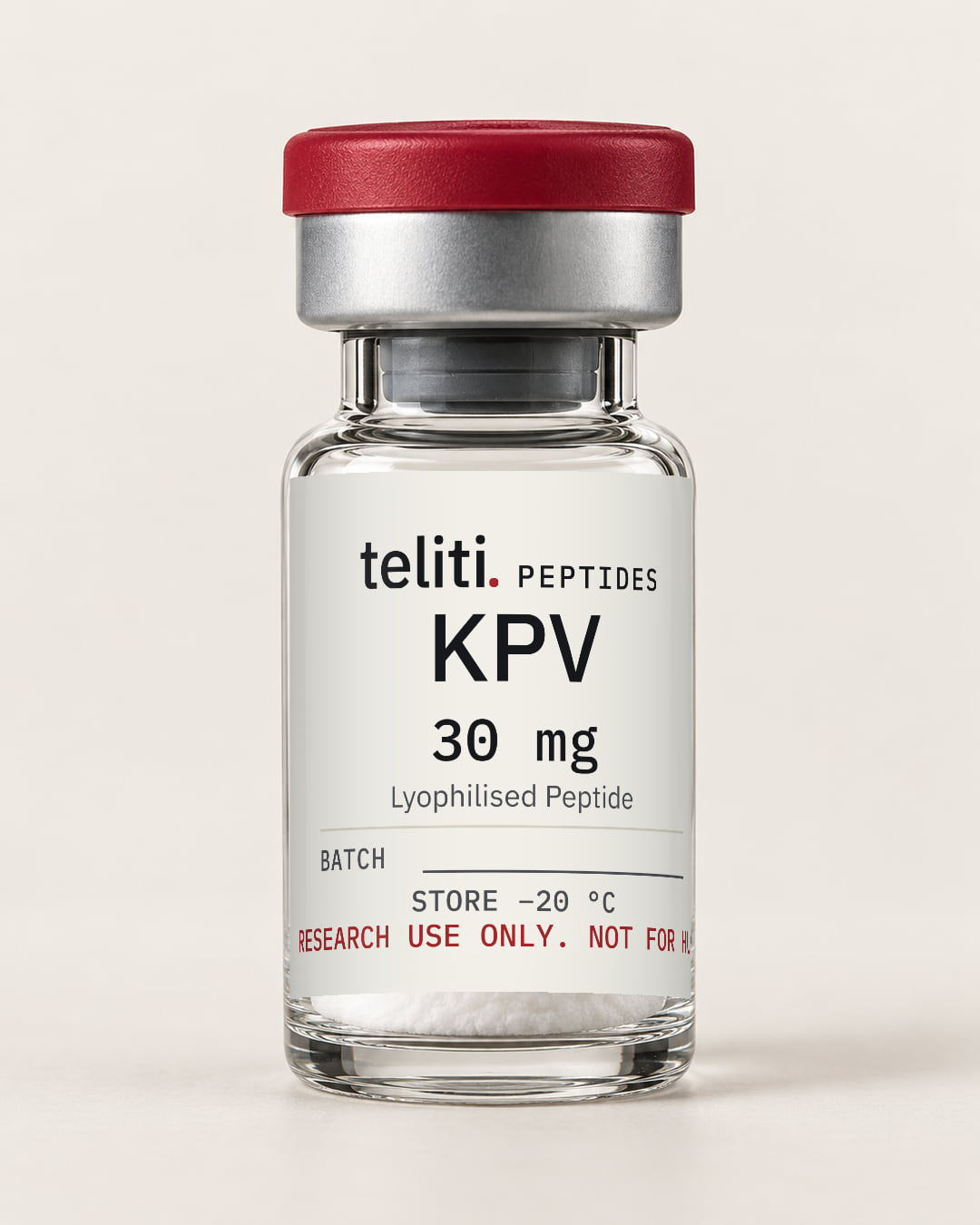
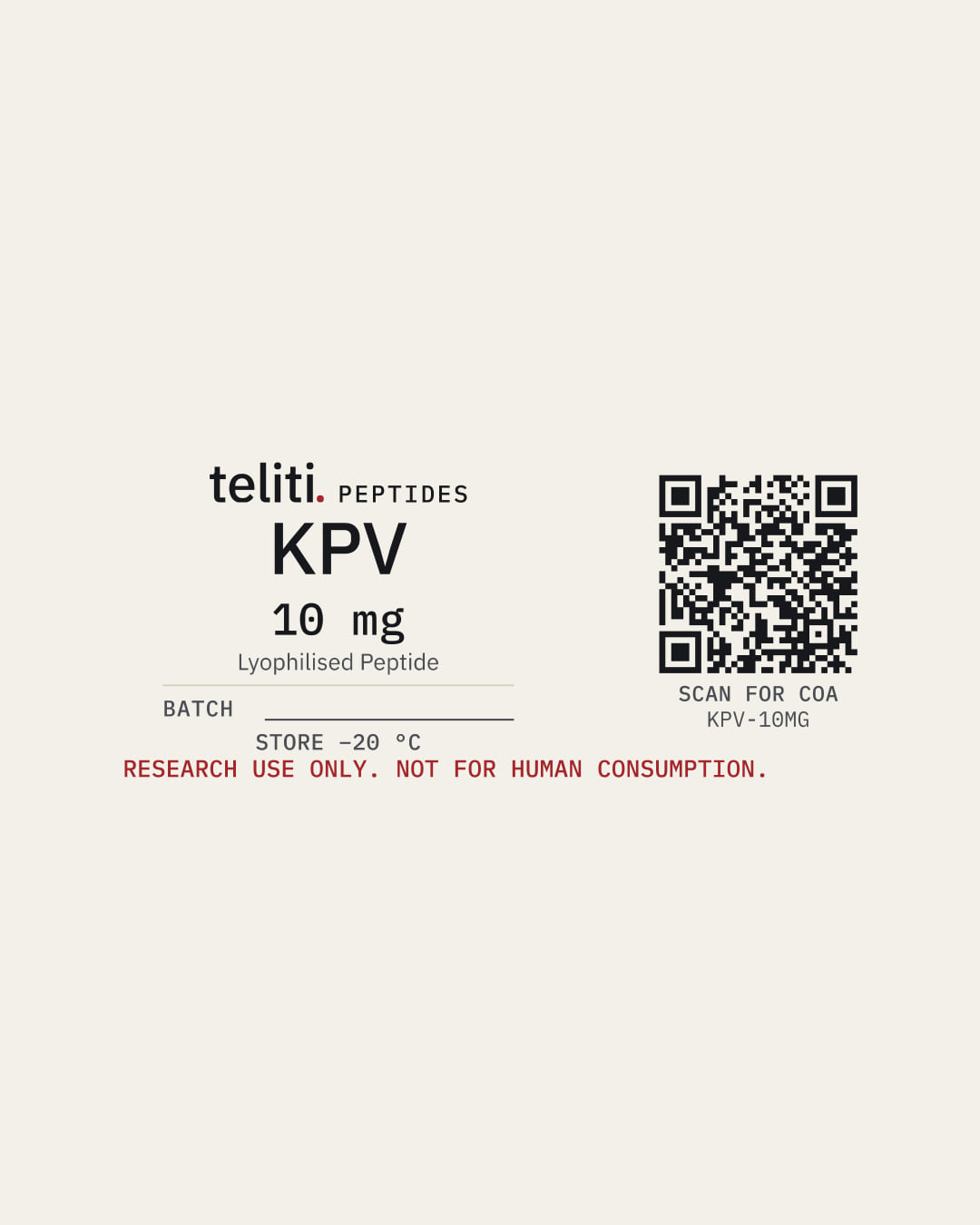
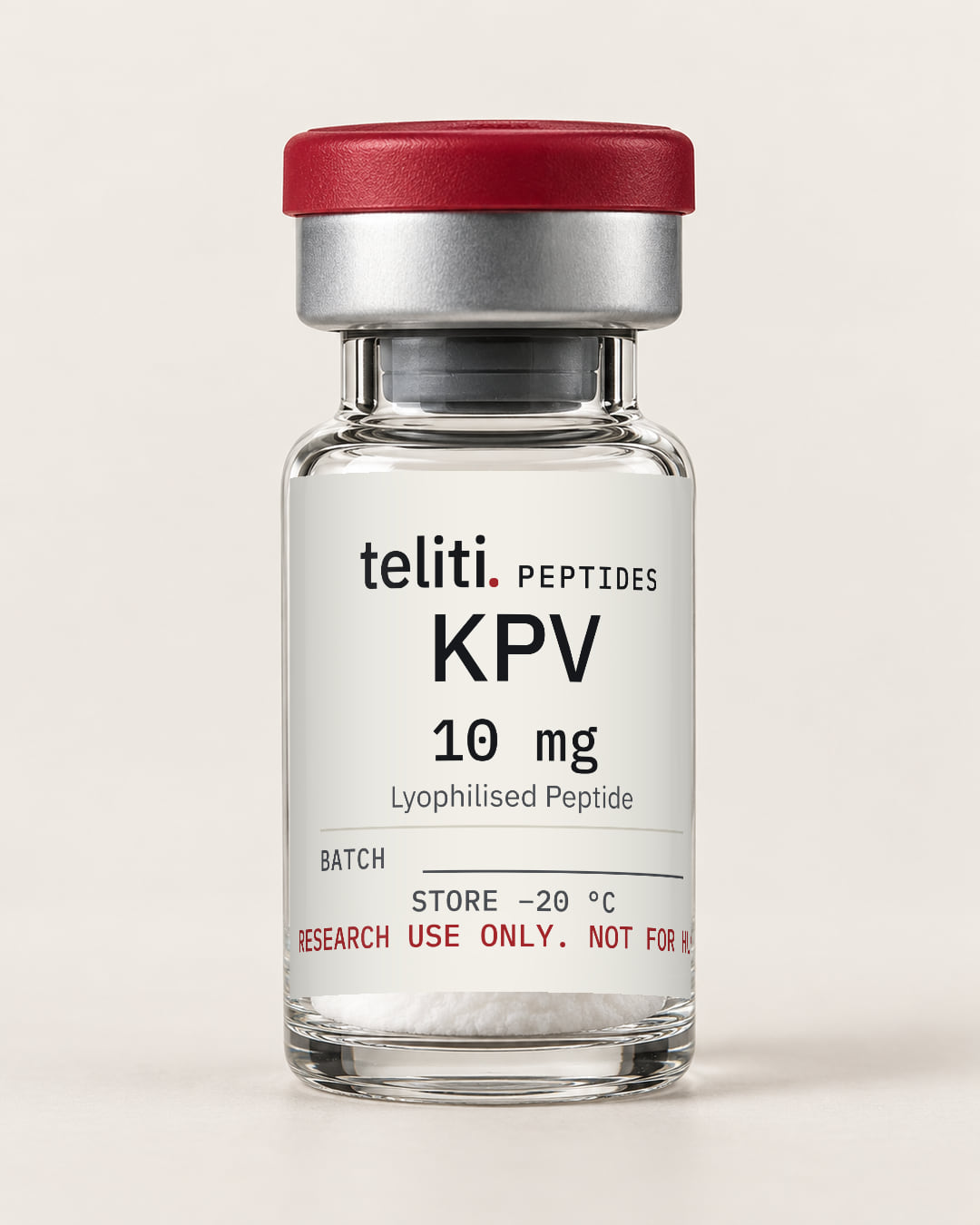
KPV Lyophilised Peptide
KPV is a tripeptide corresponding to the C-terminal residues 11-13 of alpha-melanocyte-stimulating hormone. It is classed as a research peptide and has been studied in cell culture and rodent models of intestinal inflammation. KPV is supplied as a lyophilised (freeze-dried) powder in a sealed vial, in 10 mg and 30 mg sizes, priced RM 140–310. No certificate of analysis has been published for the batch on sale yet, so no purity figure is claimed on this page. Ships within 2 working days of payment. Sold for laboratory research use only, not for human or veterinary use.
Research use only. Sold for laboratory research only. Not for human or veterinary use, not for consumption, and not a medicine, food or cosmetic.
- Ships within 2 working days of payment.
- Free shipping across Malaysia.
- Pay by FPX online banking.
Certificates of analysis
No certificate of analysis has been published for the batch on sale yet, so this page makes no purity claim. Each certificate will name the testing laboratory, the batch, the test date and the method.
KPV specifications
| Also known as | alpha-MSH (11-13), Lys-Pro-Val, MSH(11-13) |
|---|---|
| Form | Lyophilised (freeze-dried) powder in a sealed vial |
| Sizes | 10 mg · 30 mg |
| CAS number | 67727-97-3 |
| Molecular formula | C16H30N4O4 |
| Molecular weight | 342.43 g/mol |
| Sequence | KPV (Lys-Pro-Val) |
| PubChem | CID 125672 |
| Storage (sealed) | -20 °C (supplier listing: crystalline solid, TFA salt) |
What research says about KPV
KPV is a tripeptide corresponding to the C-terminal residues 11-13 of alpha-melanocyte-stimulating hormone. It is classed as a research peptide and has been studied in cell culture and rodent models of intestinal inflammation.
In cell and mouse studies, KPV has been reported to be taken up by the intestinal peptide transporter PepT1 and to inhibit NF-kappaB and MAP kinase signalling, with effects that appear partly independent of MC1R.
Investigational research peptide; the cited studies are preclinical (cell and mouse) and no approved use was found.
Cited studies
-
KPV at nanomolar concentrations inhibited NF-kappaB and MAP kinase signalling via PepT1, and oral KPV reduced DSS- and TNBS-induced colitis markers in mice.
PepT1-mediated tripeptide KPV uptake reduces intestinal inflammation.. Gastroenterology, 2008. doi:10.1053/j.gastro.2007.10.026 · PubMed 18061177
-
KPV reduced weight loss, histological inflammation and myeloperoxidase activity in two murine colitis models, with effects that appeared at least partly independent of MC1R signalling.
Melanocortin-derived tripeptide KPV has anti-inflammatory potential in murine models of inflammatory bowel disease.. Inflamm Bowel Dis, 2008. doi:10.1002/ibd.20334 · PubMed 18092346
-
Hyaluronic acid-functionalised nanoparticles delivered KPV to colonic epithelial cells and macrophages and reduced mucosal damage and TNF-alpha in a mouse colitis model.
Orally Targeted Delivery of Tripeptide KPV via Hyaluronic Acid-Functionalized Nanoparticles Efficiently Alleviates Ulcerative Colitis.. Mol Ther, 2017. doi:10.1016/j.ymthe.2016.11.020 · PubMed 28143741
Handling and storage
- Sealed vial
- -20 °C (supplier listing: crystalline solid, TFA salt)
Shipping, returns and payment
Dispatch. Ships within 2 working days of payment.
Shipping. Free shipping across Malaysia. Peninsular Malaysia 1–4 working days; Sabah, Sarawak and Labuan 3–7 working days.
Returns. No change-of-mind returns; a wrong or damaged item is replaced or refunded. Nothing here affects your rights under the Consumer Protection Act 1999.
Payment. FPX online banking.
Questions
- Is there a certificate of analysis for KPV?
Not yet for the batch on sale. When one is published it appears in the certificates table on this page with the laboratory, batch, test date, method and result. See how to read a certificate of analysis.
- How is KPV stored?
Sealed: -20 °C (supplier listing: crystalline solid, TFA salt). These are supplier figures, cited in the handling section.